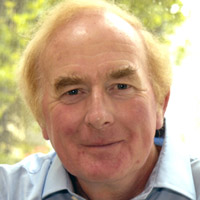
David Selby is Founding Director of Sustainability Frontiers and has been fully engaged in the organization since its inception in 2009. He was previously (2003-2009) Professor of Education for Sustainability and Director of the Centre for Sustainable Futures at the University of Plymouth, United Kingdom, and, before that (1992-2003), Professor of Education and Director of the International Institute for Global Education at the Ontario Institute for Studies in Education of the University of Toronto, Canada. He is a citizen of both Canada and the United Kingdom.
David has a long-standing international reputation for his teaching and writing on the theory and practice of environmental, global, humane, human rights and sustainability-related education. More recently he has become well known for his path finding work in climate change, disaster risk reduction and transformative environmental education.
David has lectured and led seminars, projects and workshops in some fifty countries and has been consultant to UNESCO, UNICEF, Save the Children, the Austrian charity HOPE’87, the International Red Cross, Plan International, the Norwegian Refugee Council, the Caribbean Disaster Management Agency and the Government of St Vincent and the Grenadines.
Through his work he has played a formative role in the framing of a number of key educational fields. His book, Earthrights: Education as if the Planet Really Mattered (WWF/Kogan Page,1987) mapped out the interface between the fields of development, environmental, human rights and peace education in a way that had not been done before. Its sister volume, Greenprints for Changing Schools (WWF, 1989) pioneered holistic approaches to whole school, whole system educational change. His hugely influential handbook, available in multiple translated versions, Global Teacher, Global Learner (Hodder & Stoughton,1988) brought a deep and wide theoretical framing to the field of global education while laying out the case for participatory, action-oriented and experiential global learning. His book, EarthKind (Trentham Books,1995) was a pioneering and formative contribution to the field of humane (animal-related) education.
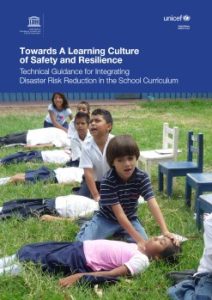
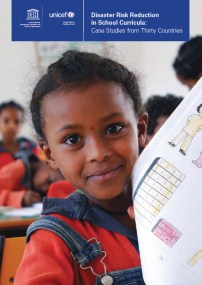
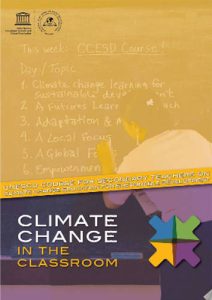
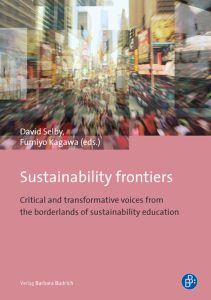
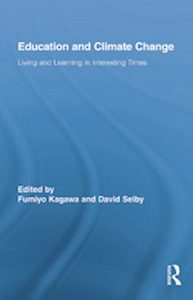
From his base with Sustainability Frontiers, his work in partnership with Fumiyo Kagawa has mapped out the fields of climate change and disaster risk reduction education. Titles of particular note include their teacher education program, Climate Change in the Classroom (UNESCO, 2013), their case study volume Disaster Risk Reduction in School Curricula (UNICEF/UNESCO, 2012) and their technical volume, Towards a Learning Culture of Safety and Resilience (UNESCO/UNICEF, 2013). Other path finding and formative contributions include Education and Climate Change: Living and Learning in Interesting Times (Routledge, 2010), the first comprehensive treatment of climate change education globally, and their ground breaking collection, Sustainability Frontiers: Critical and Transformative Voices from the Borderlands of Sustainability Education (Budrich, 2015).
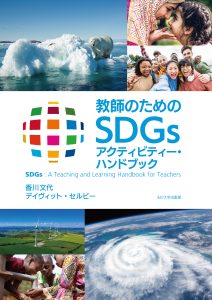
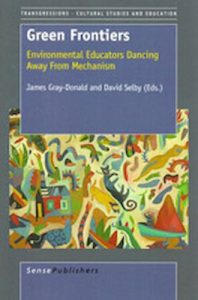
David’s other notable co-authored or co-edited books include Human Rights (Cambridge University Press, 1987), Reconnecting: From National to Global Curriculum (WWF, 1995), Perspectives on Childhood: An Approach to Citizenship Education (Cassell, 1998), the classroom activity books, In the Global Classroom Books 1 and 2 (Pippin 1999 and 2000), Weaving Connections: Educating for Peace, Social and Environmental Justice (Sumach, 2000), the Japanese essay collection, New Century, New Belongings: Essays in Global Education (Nihonhyoronsha, 2002), the German language volume, Global Learning (Cornelsen, 2003), Green Frontiers: Environmental Educators Dancing Away from Mechanism (Sense, 2008), Sustainability Education: Perspectives and Practice across Higher Education (Earthscan, 2010) and SDGs: A Teaching and Learning Handbook for Teachers (Tamagawa University Press, 2024).
His writings have been translated into a range of languages: Albanian, Arabic, Chinese, Czech, French, German, Japanese, Korean, Norwegian, Portuguese, Russian and Spanish.
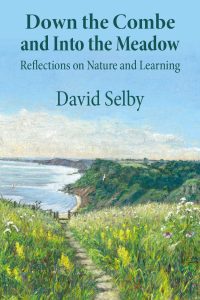
David’s current focus is on aspects of transformative environmental education, notably nature-embedded learning, place-based learning, rewilding learning and biodiversity learning. His latest book covering these fields, Down the Combe and into the Meadow: Reflections on Nature and Learning was published to critical acclaim by Blue Poppy Publishers in April 2024. For details of the book and to purchase the book from Sustainability Frontiers, click here.
David is an avid gardener, orchid lover, bird watcher, coastal and mountain walker and wild flower photographer. He is a member of Butterfly Conservation, the Devon Wildlife Trust, the Royal Horticultural Society and the Royal Society for the Protection of Birds.