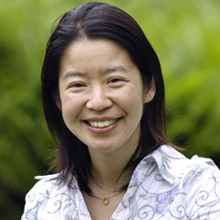
Fumiyo Kagawa, PhD, is Research Director of Sustainability Frontiers. She has expertise in holistic and transformative education theory and practice concerning climate change, disaster risk reduction, resilience building, environmental sustainability, peace building, life skills, education in emergencies and the rights of the child. Fumiyo is a Japanese citizen.
Fumiyo has long standing expertise in curriculum and pedagogical innovation, education research, education sector policy and capacity development from within holistic, rights-based and system-wide perspectives.
Fumiyo has undertaken a wide range education research and development initiatives in diverse sociocultural contexts in Asia, the Pacific, Europe, the Middle East, the Caribbean and Africa. She has been consultant to a number of UN agencies, international and national NGOs, government agencies, multilateral partnerships and funding organizations, among others.
Through her research, policy, curriculum and pedagogical work, Fumiyo seeks to strengthen the voice, agency and decision-making power of those who are most marginalized and disadvantaged.
In partnership with David Selby, Fumiyo has made a number of pathfinding contributions to the development of theory and practice of climate change, disaster risk reduction, sustainability and peacebuilding education.
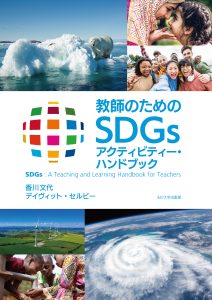
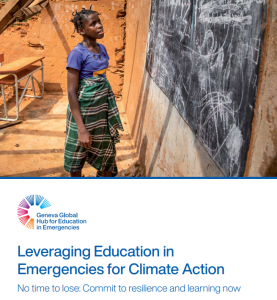
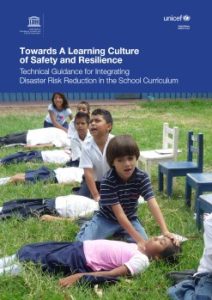
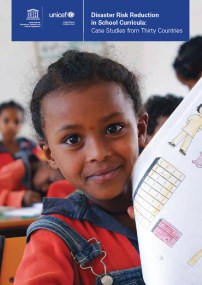
Published outcomes include: Education and Climate Change: Living and Learning in Interesting Times (Routledge, 2010), the first comprehensive treatment of climate change education globally; the ground breaking collection, Sustainability Frontiers: Critical and Transformative Voices from the Borderlands of Sustainability Education (Barbara Budrich, 2015); the UNESCO climate change teacher education program, Climate Change in the Classroom (UNESCO 2013); the first comprehensive case study volume mapping out disaster risk reduction curricula from around world, Disaster Risk Reduction in School Curricula (UNICEF/UNESCO, 2012); the technical guidance tool, Towards a Learning Culture of Safety and Resilience (UNESCO/UNICEF, 2013); a critical review of UNICEF child-friendly education theory and practice through a peacebuilding lens, Child-friendly Schooling for Peacebuilding (UNICEF, 2014); a practical primary and secondary learning activity teacher handbook on disaster risk reduction contextualized for the Caribbean region, Disaster Risk Reduction Education Toolkit (CDEMA, 2014); a flagship report on climate change and education in emergencies, Leveraging Education in Emergencies for Climate Action (Geneva Global Hub for Education in Emergencies, 2023) and a collection of 95 participatory learning activities covering issues and topics related to the UN Sustainable Development Goals, SDGs: A Teaching and Learning Handbook for Teachers (Tamagawa University Press, 2024).
More recently, Fumiyo’s work has focused on education system-wide research and development in the face of multiple and compound risks as exacerbated by climate change. She led UNICEF Regional Office for South Asia studies of impacts of and responses to climate change across the education systems covering Afghanistan, Bangladesh, Bhutan, India, Nepal, the Maldives, Pakistan and Sri Lanka (2020-2021) and also led UNICEF Pacific multi-country studies on climate change, environmental degradation, disasters and education systems covering Fiji, the Federated States of Micronesia, Kiribati, the Solomon Islands and Vanuatu (2023-2024). She has provided technical support to the Global Partnership Education Secretariat as it developed its ‘climate smart’ education framework (2023). Most recently Fumiyo’s work includes providing technical support to the UNICEF Europe and Central Asia Regional Office and its 22 Country Offices and government partners in integration and mainstreaming of climate change and environmental considerations in education systems.
Fumiyo has spoken at numerous international conferences and gatherings and has facilitated participatory workshops and training sessions for education policy makers and practitioners in a number of countries.